University Parkway Animal Hospital
(731) 661-0711
Open mobile navigation
  • Home
  • About Us
    • Our Facility
    • Our Staff
    • Hospital Fees
    • Virtual Office Tour
  • Comprehensive Vet Care
  • Services
    • Diarrhea & Vomiting
    • Ear Mites
    • Emergency Care
    • Flea and Tick Prevention
    • Heartworm Disease
      • Heartworm Prevention
      • Heartworm FAQs
    • Importance of Grooming
    • In-House IDEXX Laboratory
    • Lameness & Limping
    • Limb Amputation
    • Microchipping
      • Microchipping FAQs
    • Orthopedic Surgery
      • Dog Knee Surgery
    • Orthopedics
      • Orthopedics FAQs
    • Pet Anxiety
    • Pet Anesthesia
    • Parasite Prevention
      • Flea & Tick Problems
      • Flea & Ticks
    • Pet Boarding
    • Pet Ear Care
      • Pet Ear Infection
    • Pet Medical Examination
    • Pet Dental Care
      • Pet Teeth Cleaning
      • Pet Dental FAQs
      • Tooth Extractions
    • Pet Surgery
      • TPLO Surgery
    • Pet Allergies
      • Pet Allergies FAQs
    • Pet Dehydration and Heatstroke
    • Pet Eye Infections
    • Pet Dermatology
      • Pet Skin Conditions & Treatment
      • Canine Atopic Dermatitis
    • Pet Illness
    • Pet Grooming
    • Preventative Care
    • Pet Wellness Exams
      • Importance of Wellness Exams
    • Pet Urgent/Emergency Care
    • Puppy & Kitten Care
    • Spay and Neuter
      • Spay and Neuter FAQ
    • Soft Tissue Repairs
    • Senior Pet Care
      • Senior Pet Care FAQs
    • Toxic Ingestion
    • Vaccinations
      • Cat Vaccinations
      • Dog Vaccinations
      • Vaccinations FAQs
  • Admissions
  • Online Forms
  • Clinic Hours
  • Contact Us
  • What's New
  • Blog
  • Veterinary Topics
    • Pet Health
      • Chronic Conditions
      • Digestive and Oral Health
      • Diseases and Viruses
      • Pests and Parasites
      • Orthopedics
    • Today's Veterinarian
    • Choosing Your Pet
      • Finding Your Pet
      • Cats
      • Dogs
      • Exotics
        • Amphibians
        • Birds
        • Reptiles
          • Lizards
          • Turtles
      • Small Mammals
        • Ferrets
        • Rabbits
        • Domesticated Animals
          • Prairie Dogs
        • Pocket Pets
          • Chinchillas
          • Guinea Pigs
          • Hamsters
          • Hedgehogs
          • Rats
      • Livestock
        • Cows
        • Donkeys, Horses & Mules
        • Goats
        • Pigs
        • Poultry
        • Sheep
    • Living With Your Pet
      • Bringing Your Pet Home
      • Children and Pets
      • Providing Care
      • Travel
      • Saying Goodbye
    • Newsletter Library
      • Cats
      • Tips for Pet Owners
      • Behavior & Training
      • Fleas & Parasites
      • Keeping Pets Healthy
      • Recognizing Illness
      • Nutrition & Food
      • Pet Dangers
      • Seasonal Topics
      • Visiting the Vet
      • Equine
      • Newsletter Archive
        • Fun with Pets
        • Unbelievable Pets
    • Video Newsroom
      • Health Topics
      • Technology and Science
      • Other Interests
    • Newsletter Library
    • Client Survey
    • Pets4Kids
  • Home >
  • Articles >
  • Video Newsroom >
  • Health Topics >
  • Veterinary Ophthalmology

Veterinary Ophthalmology

  • Created in Video Newsroom, Health Topics
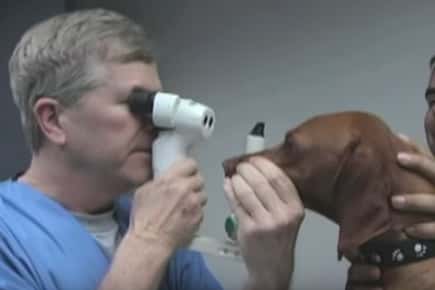
Image of veterinarian checking dog's eyesight.

It's been said that "eyes are the windows to the soul" and certainly when you look into the eyes of your beloved pets, you can see the affection and loyalty reflected there. Unfortunately, some owners look deep into their pet's eyes and see problems. When your pet's vision is at stake, veterinary ophthalmologists stand ready to take action!

As part of your pet's regular check up, the veterinarian will spend time peering into the depths of the animal's eyes. In the majority of cases, the doctor will see eyes that are bright, clear and free of any sort of abnormality.

Occasionally though, pets present to their veterinarian with injuries, scratches or irritation to their eyes or eyelids. Some pets have inverted eyelids (entropion) or even extra eyelashes that grow on the inner surface of the eyelid (distichiasis). Short faced dogs and cats often find themselves with scratched corneas from normal play and roughhousing with other pets. Some pups will end up with a condition known as "cherry eye" where the gland of the third eyelid protrudes up and away from its normal position.

In many of these cases, your veterinarian can flush the eyes, provide the right medications or possibly even perform minor surgery to protect the pet's vision. But, if the issue is complex, not resolving or when serious eye problems, like glaucoma, cataracts or even retinal detachments occur, veterinary ophthalmologists are often called to help the pet and pet owner.

These eye specialists undergo intensive training and testing in order to obtain certification from the American College of Veterinary Ophthalmologists (ACVO). After completing veterinary school, candidates for certification often complete an internship before starting a rigorous residency. All of this extra education must be completed before the doctor attempts to pass the "board exam". It is not unusual for a veterinarian to spend an additional 3-4 years in preparation for a testing process that spans four days and includes written, practical and surgical sections. All told, there are less than 375 veterinary eye specialists in the United States.

These dedicated professionals often have the needed expertise and special equipment that your pet's regular veterinarian does not have. Delicate surgical instruments and unique diagnostic tools are just a few of the devices available to veterinary ophthalmologists. Some of these eye doctors even have special mazes set up at their practice in order to more fully test your pet's vision capabilities.

Beyond helping dogs and cats, it is not uncommon to see ophthalmologists working with horses, birds and even zoo animals, like sea lions or dolphins!

Each year, the ACVO and its members provide free eye examinations to the thousands of service animals helping disabled individuals around the country. Partnering with veterinary companies, the ACVO has helped screen more than 6,000 animals for eye problems and donated more than $250,000 in free services to treat issues they have found. Individuals with service animals are encouraged to visit www.acvoeyeexam.org to find locations and doctors for this annual event.

In addition to this great work, the ACVO has also established the Vision for Animals Foundation. This not-for-profit organization supports research into many of our pet's eye disease. More than $150,000 has been granted to researchers who are focused on eliminating the most serious problems affecting the vision of our pets.

Pet owners can help their veterinarian and the veterinary ophthalmologist by addressing any eye issue promptly. It's important to have the eyes examined if there is any irritation or injury and to avoid using over the counter or previously prescribed medications. Some of these might contain steroids which will hinder the healing process. Signs that your pet is uncomfortable include continual squinting, pawing at the eyes or even severe redness. If you note any of these symptoms, or even your pet just doesn't seem to see as well as he or she ages, a examination with your veterinarian is warranted.

Your veterinarian will work closely with the veterinary ophthalmologist in order to do what is best for your pet and to protect his or her vision.

  • Pet Health
    • Chronic Conditions
    • Digestive and Oral Health
    • Diseases and Viruses
    • Pests and Parasites
    • Orthopedics
  • Today's Veterinarian
  • Choosing Your Pet
    • Finding Your Pet
    • Cats
    • Dogs
    • Exotics
      • Amphibians
      • Birds
      • Reptiles
        • Lizards
        • Turtles
    • Small Mammals
      • Ferrets
      • Rabbits
      • Domesticated Animals
        • Prairie Dogs
      • Pocket Pets
        • Chinchillas
        • Guinea Pigs
        • Hamsters
        • Hedgehogs
        • Rats
    • Livestock
      • Cows
      • Donkeys, Horses & Mules
      • Goats
      • Pigs
      • Poultry
      • Sheep
  • Living With Your Pet
    • Bringing Your Pet Home
    • Children and Pets
    • Providing Care
    • Travel
    • Saying Goodbye
  • Newsletter Library
    • Cats
    • Tips for Pet Owners
    • Behavior & Training
    • Fleas & Parasites
    • Keeping Pets Healthy
    • Recognizing Illness
    • Nutrition & Food
    • Pet Dangers
    • Seasonal Topics
    • Visiting the Vet
    • Equine
    • Newsletter Archive
      • Fun with Pets
      • Unbelievable Pets
  • Video Newsroom
    • Health Topics
    • Technology and Science
    • Other Interests
  • Newsletter Library
  • Client Survey
  • Pets4Kids

Sign up using the form below or call (731) 661-0711 to make an appointment.

Error!

    • Services

      We strive to be your best Jackson veterinary clinic.
    • Make An Appointment

      University Parkway Animal Hospital will do our best to accommodate your busy schedule!
    • Online Pharmacy

      Check out our pharmacy, hosted by your vet in Jackson.

    Office Hours

    Our Regular Schedule

    Monday:

    7:30 am-5:00 pm

    Tuesday:

    7:30 am-12:00 pm

    Wednesday:

    7:30 am-5:00 pm

    Thursday:

    7:30 am-5:00 pm

    Friday:

    7:30 am-5:00 pm

    Saturday:

    Closed

    Sunday:

    Closed

    Location

    Find us on the map

    Testimonials

    What University Parkway Vet Clients Say

    Took my kitten there today (they are not closed, as the Facebook page says!), and loved it! Very kind, friendly staff who really give their time and attention to your pet! Highly recommend!

    Kippi Wood Adams

    Newsletter Sign Up

    Sign up for more articles

    Error!

      • Copyright © 2026 MH Sub I, LLC dba iMatrix.
      • Admin Log In
      • Site Map