University Parkway Animal Hospital
(731) 661-0711
Open mobile navigation
  • Home
  • About Us
    • Our Facility
    • Our Staff
    • Hospital Fees
    • Virtual Office Tour
  • Comprehensive Vet Care
  • Services
    • Diarrhea & Vomiting
    • Ear Mites
    • Emergency Care
    • Flea and Tick Prevention
    • Heartworm Disease
      • Heartworm Prevention
      • Heartworm FAQs
    • Importance of Grooming
    • In-House IDEXX Laboratory
    • Lameness & Limping
    • Limb Amputation
    • Microchipping
      • Microchipping FAQs
    • Orthopedic Surgery
      • Dog Knee Surgery
    • Orthopedics
      • Orthopedics FAQs
    • Pet Anxiety
    • Pet Anesthesia
    • Parasite Prevention
      • Flea & Tick Problems
      • Flea & Ticks
    • Pet Boarding
    • Pet Ear Care
      • Pet Ear Infection
    • Pet Medical Examination
    • Pet Dental Care
      • Pet Teeth Cleaning
      • Pet Dental FAQs
      • Tooth Extractions
    • Pet Surgery
      • TPLO Surgery
    • Pet Allergies
      • Pet Allergies FAQs
    • Pet Dehydration and Heatstroke
    • Pet Eye Infections
    • Pet Dermatology
      • Pet Skin Conditions & Treatment
      • Canine Atopic Dermatitis
    • Pet Illness
    • Pet Grooming
    • Preventative Care
    • Pet Wellness Exams
      • Importance of Wellness Exams
    • Pet Urgent/Emergency Care
    • Puppy & Kitten Care
    • Spay and Neuter
      • Spay and Neuter FAQ
    • Soft Tissue Repairs
    • Senior Pet Care
      • Senior Pet Care FAQs
    • Toxic Ingestion
    • Vaccinations
      • Cat Vaccinations
      • Dog Vaccinations
      • Vaccinations FAQs
  • Admissions
  • Online Forms
  • Clinic Hours
  • Contact Us
  • What's New
  • Blog
  • Veterinary Topics
    • Pet Health
      • Chronic Conditions
      • Digestive and Oral Health
      • Diseases and Viruses
      • Pests and Parasites
      • Orthopedics
    • Today's Veterinarian
    • Choosing Your Pet
      • Finding Your Pet
      • Cats
      • Dogs
      • Exotics
        • Amphibians
        • Birds
        • Reptiles
          • Lizards
          • Turtles
      • Small Mammals
        • Ferrets
        • Rabbits
        • Domesticated Animals
          • Prairie Dogs
        • Pocket Pets
          • Chinchillas
          • Guinea Pigs
          • Hamsters
          • Hedgehogs
          • Rats
      • Livestock
        • Cows
        • Donkeys, Horses & Mules
        • Goats
        • Pigs
        • Poultry
        • Sheep
    • Living With Your Pet
      • Bringing Your Pet Home
      • Children and Pets
      • Providing Care
      • Travel
      • Saying Goodbye
    • Newsletter Library
      • Cats
      • Tips for Pet Owners
      • Behavior & Training
      • Fleas & Parasites
      • Keeping Pets Healthy
      • Recognizing Illness
      • Nutrition & Food
      • Pet Dangers
      • Seasonal Topics
      • Visiting the Vet
      • Equine
      • Newsletter Archive
        • Fun with Pets
        • Unbelievable Pets
    • Video Newsroom
      • Health Topics
      • Technology and Science
      • Other Interests
    • Newsletter Library
    • Client Survey
    • Pets4Kids
  • Home >
  • Articles >
  • Feline >
  • Living With Your Pet >
  • Bringing Your Pet Home >
  • Create an Environment Your Cat Will Love

Create an Environment Your Cat Will Love

  • Created in Feline, Living With Your Pet, Bringing Your Pet Home

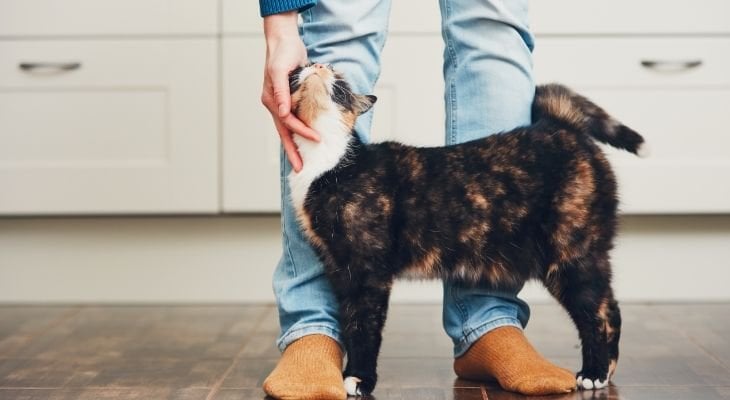
cat getting petted
The Journal of Feline Medicine and Surgery confirms that feline emotional wellbeing, behavior and physical health are a result of how comfortable they are in their environment. Understanding how our cats interact with their environment can help us create a space for owners and cats to mutually thrive together. Not only does your feline's wellness rely on her environmental conditions, but also on social interaction between humans.

Indoor Vs. Outdoor

Should you keep your cat strictly indoors or allow it to go outside? Several national associations of veterinarians advocate that domestic cats be kept inside for their health, safety, and the safety of surrounding native wildlife. Pet cats that are allowed to roam freely outdoors are subject to many dangers including, but not limited to:

• Cars
• Motorcycles
• Bicycles
• Attacks from other animals
• Possible human cruelty
• Poisons, traps
• Feline-specific diseases
• Zoonotic diseases

Often cat owners that allow their cats to roam outdoors are surprised to find that their cat is continually crossing major streets and roaming far beyond their immediate neighborhood. Lastly, allowing cats to roam outdoors affects the surrounding native wildlife populations. While owned cats do not hunt animals for survival, they will kill and maim animals based on instinct. This predation can have a significant impact on rodent and bird species.

Creating an Enriched Indoor Environment

Without an investment in enriching the indoor environment, indoor cats can suffer boredom from predictability, stress, and obesity from inactivity. This is especially true if your cat was once an outdoor cat and you've transitioned him to an indoor-only pet. The best solution to prevent any of these issues is to give indoor cats what they need to thrive:

• Keep a litter tray in a private area. Be sure to clean regularly, removing eliminations daily, so cats will not be reluctant to use the box. Indoor cats will improperly eliminate or hold a bowel movement for days if they feel uncomfortable in their space. Avoid a potential health issue by keeping it clean.
• While an indoor environment may be perceived as safer, be sure to carefully place potentially toxic house plants and lock cabinets with cleaning supplies. We know how curious cats can be- they'll try to get inside anything left slightly ajar.
• Provide a scratching post or climbing wall, balls, feathers, or other play toys. Some cats like catnip, and this can be placed inside toys. Cats love to be up high, some people build walkways, close to the ceiling, around a room. Keep your feline busy, and you'll be their main companion.
• Be sure to check crawl spaces, attics, washer and dryers, dishwashers and refrigerators before and after use.
• Consider getting them a companion. At first, felines may be reluctant to welcome another cat, but over time most thrive due to the interaction.

For those cats who refuse to be a strictly indoor cat, there are things you can do to help protect them when outside. If you have a solid backyard fence, you can build an overhang at the top of the fence with piping and netting. The overhang should be about two feet long, and project inward at about a 45 degree angle, so the cat can not jump over the fence, and it also makes it harder for another cat to jump into your yard. If you do not have a solid back yard fence, you can build an enclosed patio space so the cats have access from the house.

Sources:

Ellis, SL; Rodan, I; Carney, HC; Rochiltz, I; Shearburn, LD; Sundahl, E; and Westropp, JL. “AAFP and ISFM Feline Environmental Needs Guidelines.” Journal of Feline Medical Surgery, March 2013.

American Humane Association, “Indoor Cats vs. Outdoor Cats.”

American Association of Feline Practitioners. “Confinement of Owned Indoor Cats Position Statement.” 2007.

  • Pet Health
    • Chronic Conditions
    • Digestive and Oral Health
    • Diseases and Viruses
    • Pests and Parasites
    • Orthopedics
  • Today's Veterinarian
  • Choosing Your Pet
    • Finding Your Pet
    • Cats
    • Dogs
    • Exotics
      • Amphibians
      • Birds
      • Reptiles
        • Lizards
        • Turtles
    • Small Mammals
      • Ferrets
      • Rabbits
      • Domesticated Animals
        • Prairie Dogs
      • Pocket Pets
        • Chinchillas
        • Guinea Pigs
        • Hamsters
        • Hedgehogs
        • Rats
    • Livestock
      • Cows
      • Donkeys, Horses & Mules
      • Goats
      • Pigs
      • Poultry
      • Sheep
  • Living With Your Pet
    • Bringing Your Pet Home
    • Children and Pets
    • Providing Care
    • Travel
    • Saying Goodbye
  • Newsletter Library
    • Cats
    • Tips for Pet Owners
    • Behavior & Training
    • Fleas & Parasites
    • Keeping Pets Healthy
    • Recognizing Illness
    • Nutrition & Food
    • Pet Dangers
    • Seasonal Topics
    • Visiting the Vet
    • Equine
    • Newsletter Archive
      • Fun with Pets
      • Unbelievable Pets
  • Video Newsroom
    • Health Topics
    • Technology and Science
    • Other Interests
  • Newsletter Library
  • Client Survey
  • Pets4Kids

Sign up using the form below or call (731) 661-0711 to make an appointment.

Error!

    • Services

      We strive to be your best Jackson veterinary clinic.
    • Make An Appointment

      University Parkway Animal Hospital will do our best to accommodate your busy schedule!
    • Online Pharmacy

      Check out our pharmacy, hosted by your vet in Jackson.

    Office Hours

    Our Regular Schedule

    Monday:

    7:30 am-5:00 pm

    Tuesday:

    7:30 am-12:00 pm

    Wednesday:

    7:30 am-5:00 pm

    Thursday:

    7:30 am-5:00 pm

    Friday:

    7:30 am-5:00 pm

    Saturday:

    Closed

    Sunday:

    Closed

    Location

    Find us on the map

    Testimonials

    What University Parkway Vet Clients Say

    Took my kitten there today (they are not closed, as the Facebook page says!), and loved it! Very kind, friendly staff who really give their time and attention to your pet! Highly recommend!

    Kippi Wood Adams

    Newsletter Sign Up

    Sign up for more articles

    Error!

      • Copyright © 2026 MH Sub I, LLC dba iMatrix.
      • Admin Log In
      • Site Map