University Parkway Animal Hospital
(731) 661-0711
Open mobile navigation
  • Home
  • About Us
    • Our Facility
    • Our Staff
    • Hospital Fees
    • Virtual Office Tour
  • Comprehensive Vet Care
  • Services
    • Diarrhea & Vomiting
    • Ear Mites
    • Emergency Care
    • Flea and Tick Prevention
    • Heartworm Disease
      • Heartworm Prevention
      • Heartworm FAQs
    • Importance of Grooming
    • In-House IDEXX Laboratory
    • Lameness & Limping
    • Limb Amputation
    • Microchipping
      • Microchipping FAQs
    • Orthopedic Surgery
      • Dog Knee Surgery
    • Orthopedics
      • Orthopedics FAQs
    • Pet Anxiety
    • Pet Anesthesia
    • Parasite Prevention
      • Flea & Tick Problems
      • Flea & Ticks
    • Pet Boarding
    • Pet Ear Care
      • Pet Ear Infection
    • Pet Medical Examination
    • Pet Dental Care
      • Pet Teeth Cleaning
      • Pet Dental FAQs
      • Tooth Extractions
    • Pet Surgery
      • TPLO Surgery
    • Pet Allergies
      • Pet Allergies FAQs
    • Pet Dehydration and Heatstroke
    • Pet Eye Infections
    • Pet Dermatology
      • Pet Skin Conditions & Treatment
      • Canine Atopic Dermatitis
    • Pet Illness
    • Pet Grooming
    • Preventative Care
    • Pet Wellness Exams
      • Importance of Wellness Exams
    • Pet Urgent/Emergency Care
    • Puppy & Kitten Care
    • Spay and Neuter
      • Spay and Neuter FAQ
    • Soft Tissue Repairs
    • Senior Pet Care
      • Senior Pet Care FAQs
    • Toxic Ingestion
    • Vaccinations
      • Cat Vaccinations
      • Dog Vaccinations
      • Vaccinations FAQs
  • Admissions
  • Online Forms
  • Clinic Hours
  • Contact Us
  • What's New
  • Blog
  • Veterinary Topics
    • Pet Health
      • Chronic Conditions
      • Digestive and Oral Health
      • Diseases and Viruses
      • Pests and Parasites
      • Orthopedics
    • Today's Veterinarian
    • Choosing Your Pet
      • Finding Your Pet
      • Cats
      • Dogs
      • Exotics
        • Amphibians
        • Birds
        • Reptiles
          • Lizards
          • Turtles
      • Small Mammals
        • Ferrets
        • Rabbits
        • Domesticated Animals
          • Prairie Dogs
        • Pocket Pets
          • Chinchillas
          • Guinea Pigs
          • Hamsters
          • Hedgehogs
          • Rats
      • Livestock
        • Cows
        • Donkeys, Horses & Mules
        • Goats
        • Pigs
        • Poultry
        • Sheep
    • Living With Your Pet
      • Bringing Your Pet Home
      • Children and Pets
      • Providing Care
      • Travel
      • Saying Goodbye
    • Newsletter Library
      • Cats
      • Tips for Pet Owners
      • Behavior & Training
      • Fleas & Parasites
      • Keeping Pets Healthy
      • Recognizing Illness
      • Nutrition & Food
      • Pet Dangers
      • Seasonal Topics
      • Visiting the Vet
      • Equine
      • Newsletter Archive
        • Fun with Pets
        • Unbelievable Pets
    • Video Newsroom
      • Health Topics
      • Technology and Science
      • Other Interests
    • Newsletter Library
    • Client Survey
    • Pets4Kids
  • Home >
  • Articles >
  • Newsletter Library >
  • Health Problems Common in Large Dogs

Health Problems Common in Large Dogs

  • Created in Newsletter Library

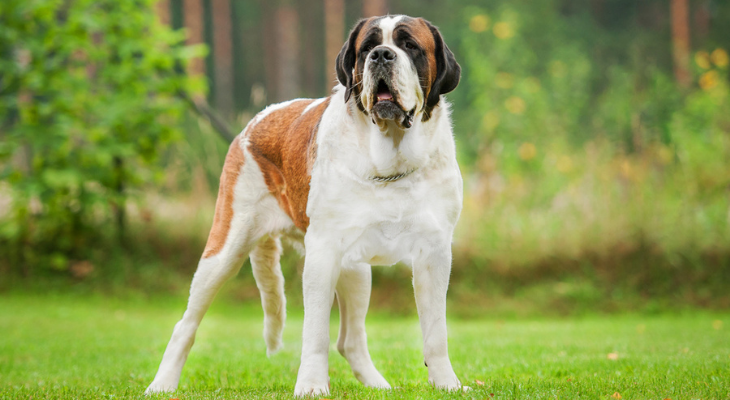
Saint Bernard standing in grass field

Common Health Issues to Look for in Large Dog Breeds

Your dog's size could increase its risk of developing certain diseases and conditions. These conditions are among the most common in large breeds.

Entropion

Do your dog's eyelids turn under? Entropion, a problem common in large dogs, may be the reason. The condition is usually noticeable by the time your dog turns one. Although entropion may not sound serious, it's much more than just a cosmetic issue.

Small hairs on your dog's eyelid can irritate the cornea, the clear, rounded layer of tissue that covers your dog's iris and pupil. Painful ulcers can develop as a result of the irritation. Dark scar tissue may also form over the wounded part of the cornea and could interfere with your furry friend's vision. If your dog has entropion, you may notice red eyes or pus on the outside edges of the eyes.

Antibiotic eye drops help ulcers heal, while artificial tears keep the eyes moist. In some cases, surgery may be needed to prevent the eyelids from folding inward.

Dysplasia

Both hip and elbow dysplasia tend to affect bigger dogs more than small ones. Dysplasia happens when the bones in a joint don't fit together smoothly. Dysplasia can cause painful slipping or grinding of the hip or elbow joints when your dog walks, runs, or moves.

Symptoms can include limping, stiffness, unwillingness to climb stairs, change in gait, and decreased range of motion. Keeping your pet at the ideal weight can be helpful, as extra pounds may stress the joints. Glucosamine supplements can also reduce joint pain. If the dysplasia is severe and the joint is damaged, surgery may be needed to reduce pain and improve your dog's ability to move.

Bloat

Bloat occurs when your dog's stomach fills with air and twists. The condition prevents blood from flowing freely to all parts of the body, including the heart and other organs. Although any dog can develop bloat, it's more likely to occur in Great Danes, Irish Setters, Gordon Setters, Weimaraners, Doberman Pinschers, and St. Bernards, according to the American Kennel Club.

A painful, swollen abdomen could be a sign that your dog has bloat. Other signs include trying unsuccessfully to vomit, panting, drooling, or seeming restless or upset. Prompt treatment is essential if you notice any of these signs. Dogs can die within a matter of hours if they don't undergo emergency surgery.

Arthritis

Big dogs are more prone to developing arthritis due in part to their large size. Arthritis wears away the cartilage at the end of the bones that allow the bones to move smoothly in the joints. Arthritis may cause many of the same symptoms as dysplasia, including:

  • Lameness
  • Limping
  • Stiff joints
  • Irritability
  • Creaking or grating sound when your dog walks
  • Trouble with stairs or jumping
  • Disinterest in regular activities

Dogs that have arthritis may gain weight because they're less active. Unfortunately, extra weight stresses the joints and can make the symptoms of arthritis worse. Treatment for arthritis may include anti-inflammatory medications, steroids, and glucosamine.

Your pet may be more likely to develop joint problems if it's overweight or obese, although just being large can cause problems for its joints. Your pet's veterinarian can recommend safe weight loss approaches and other lifestyle changes. Some dogs may eventually need surgery if medication and lifestyle changes aren't helpful.

Dilated Cardiomyopathy

Dilated cardiomyopathy happens when the heart becomes enlarged and weakens, making it difficult to pump blood effectively. It's another condition that can affect any dog but occurs more often in larger dogs.

Although dilated cardiomyopathy may not cause any symptoms at first, as the disease worsens your pet may get tired more easily. Other signs and symptoms include swollen abdomen, difficulty breathing, coughing, weakness, and fainting. Medication may help slow the progression of the condition, but unfortunately, most dogs that develop dilated cardiomyopathy eventually die.

If you have a large dog breed, you should monitor its weight and overall well-being while also taking it to the veterinarian for routine wellness exams. Contact our office to schedule an appointment and we can help your big dog live a healthy life.

Sources:

American Kennel Club: Hip Dysplasia in Dogs, 2/17/21

Animal Wellness: Health Issues in Giant Breeds, 3/23/15

Washington State University: Dilated Cardiomyopathy (DCM)

American Kennel Club: Bloat (or GDV) in Dogs – What It Is and How It’s Treated, 11/3/16

  • Pet Health
    • Chronic Conditions
    • Digestive and Oral Health
    • Diseases and Viruses
    • Pests and Parasites
    • Orthopedics
  • Today's Veterinarian
  • Choosing Your Pet
    • Finding Your Pet
    • Cats
    • Dogs
    • Exotics
      • Amphibians
      • Birds
      • Reptiles
        • Lizards
        • Turtles
    • Small Mammals
      • Ferrets
      • Rabbits
      • Domesticated Animals
        • Prairie Dogs
      • Pocket Pets
        • Chinchillas
        • Guinea Pigs
        • Hamsters
        • Hedgehogs
        • Rats
    • Livestock
      • Cows
      • Donkeys, Horses & Mules
      • Goats
      • Pigs
      • Poultry
      • Sheep
  • Living With Your Pet
    • Bringing Your Pet Home
    • Children and Pets
    • Providing Care
    • Travel
    • Saying Goodbye
  • Newsletter Library
    • Cats
    • Tips for Pet Owners
    • Behavior & Training
    • Fleas & Parasites
    • Keeping Pets Healthy
    • Recognizing Illness
    • Nutrition & Food
    • Pet Dangers
    • Seasonal Topics
    • Visiting the Vet
    • Equine
    • Newsletter Archive
      • Fun with Pets
      • Unbelievable Pets
  • Video Newsroom
    • Health Topics
    • Technology and Science
    • Other Interests
  • Newsletter Library
  • Client Survey
  • Pets4Kids

Sign up using the form below or call (731) 661-0711 to make an appointment.

Error!

    • Services

      We strive to be your best Jackson veterinary clinic.
    • Make An Appointment

      University Parkway Animal Hospital will do our best to accommodate your busy schedule!
    • Online Pharmacy

      Check out our pharmacy, hosted by your vet in Jackson.

    Office Hours

    Our Regular Schedule

    Monday:

    7:30 am-5:00 pm

    Tuesday:

    7:30 am-12:00 pm

    Wednesday:

    7:30 am-5:00 pm

    Thursday:

    7:30 am-5:00 pm

    Friday:

    7:30 am-5:00 pm

    Saturday:

    Closed

    Sunday:

    Closed

    Location

    Find us on the map

    Testimonials

    What University Parkway Vet Clients Say

    Took my kitten there today (they are not closed, as the Facebook page says!), and loved it! Very kind, friendly staff who really give their time and attention to your pet! Highly recommend!

    Kippi Wood Adams

    Newsletter Sign Up

    Sign up for more articles

    Error!

      • Copyright © 2026 MH Sub I, LLC dba iMatrix.
      • Admin Log In
      • Site Map