University Parkway Animal Hospital
(731) 661-0711
Open mobile navigation
  • Home
  • About Us
    • Our Facility
    • Our Staff
    • Hospital Fees
    • Virtual Office Tour
  • Comprehensive Vet Care
  • Services
    • Diarrhea & Vomiting
    • Ear Mites
    • Emergency Care
    • Flea and Tick Prevention
    • Heartworm Disease
      • Heartworm Prevention
      • Heartworm FAQs
    • Importance of Grooming
    • In-House IDEXX Laboratory
    • Lameness & Limping
    • Limb Amputation
    • Microchipping
      • Microchipping FAQs
    • Orthopedic Surgery
      • Dog Knee Surgery
    • Orthopedics
      • Orthopedics FAQs
    • Pet Anxiety
    • Pet Anesthesia
    • Parasite Prevention
      • Flea & Tick Problems
      • Flea & Ticks
    • Pet Boarding
    • Pet Ear Care
      • Pet Ear Infection
    • Pet Medical Examination
    • Pet Dental Care
      • Pet Teeth Cleaning
      • Pet Dental FAQs
      • Tooth Extractions
    • Pet Surgery
      • TPLO Surgery
    • Pet Allergies
      • Pet Allergies FAQs
    • Pet Dehydration and Heatstroke
    • Pet Eye Infections
    • Pet Dermatology
      • Pet Skin Conditions & Treatment
      • Canine Atopic Dermatitis
    • Pet Illness
    • Pet Grooming
    • Preventative Care
    • Pet Wellness Exams
      • Importance of Wellness Exams
    • Pet Urgent/Emergency Care
    • Puppy & Kitten Care
    • Spay and Neuter
      • Spay and Neuter FAQ
    • Soft Tissue Repairs
    • Senior Pet Care
      • Senior Pet Care FAQs
    • Toxic Ingestion
    • Vaccinations
      • Cat Vaccinations
      • Dog Vaccinations
      • Vaccinations FAQs
  • Admissions
  • Online Forms
  • Clinic Hours
  • Contact Us
  • What's New
  • Blog
  • Veterinary Topics
    • Pet Health
      • Chronic Conditions
      • Digestive and Oral Health
      • Diseases and Viruses
      • Pests and Parasites
      • Orthopedics
    • Today's Veterinarian
    • Choosing Your Pet
      • Finding Your Pet
      • Cats
      • Dogs
      • Exotics
        • Amphibians
        • Birds
        • Reptiles
          • Lizards
          • Turtles
      • Small Mammals
        • Ferrets
        • Rabbits
        • Domesticated Animals
          • Prairie Dogs
        • Pocket Pets
          • Chinchillas
          • Guinea Pigs
          • Hamsters
          • Hedgehogs
          • Rats
      • Livestock
        • Cows
        • Donkeys, Horses & Mules
        • Goats
        • Pigs
        • Poultry
        • Sheep
    • Living With Your Pet
      • Bringing Your Pet Home
      • Children and Pets
      • Providing Care
      • Travel
      • Saying Goodbye
    • Newsletter Library
      • Cats
      • Tips for Pet Owners
      • Behavior & Training
      • Fleas & Parasites
      • Keeping Pets Healthy
      • Recognizing Illness
      • Nutrition & Food
      • Pet Dangers
      • Seasonal Topics
      • Visiting the Vet
      • Equine
      • Newsletter Archive
        • Fun with Pets
        • Unbelievable Pets
    • Video Newsroom
      • Health Topics
      • Technology and Science
      • Other Interests
    • Newsletter Library
    • Client Survey
    • Pets4Kids
  • Home >
  • Articles >
  • Newsletter Library >
  • Could Your Cat Have a Neurological Disorder?

Could Your Cat Have a Neurological Disorder?

  • Created in Newsletter Library

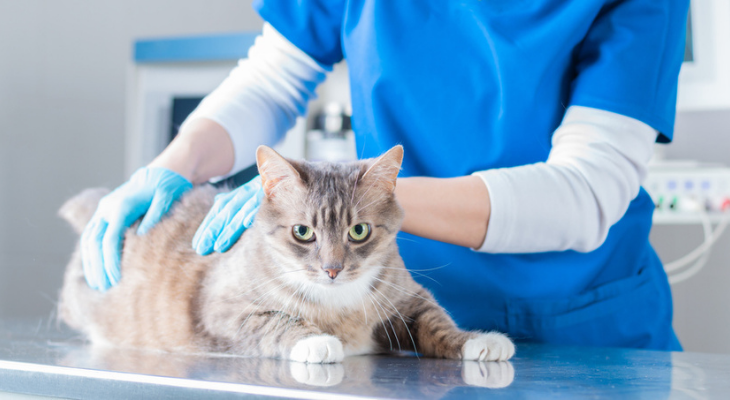
Cat at the vet

Common Neurological Disorders in Cats

Does your cat lose its balance easily, stare into space, drool, or twitch? Your furry friend's strange behavior could be caused by a neurological disorder that affects the brain, nerves, or spinal cord. These disorders are among the most common neurological problems diagnosed in cats.

Vestibular Disease

A cat with vestibular disease may have trouble keeping its balance. When it tries to stand, it may lean to one side and fall. Your cat may also walk in circles, tilt its head to the side, or move its eyes back and forth very quickly. Ear infections, bacterial diseases, tumors, or exposure to toxic drugs can be responsible for the unusual behavior, although it may not always be easy to determine the cause of the disease.

Treating the underlying condition or disease, if one can be identified, can improve the symptoms. Medication that relieves nausea and vomiting may be helpful. Luckily, the symptoms of vestibular disease usually only last a day or two.

Herniated Discs

Rubbery discs cushion the vertebrae that make up your cat's spine. A disc becomes herniated if the soft inner core of the disc begins to bulge through the tough outer layer. If the herniated disc presses on a nerve, your cat may experience:

  • Difficulty walking or jumping
  • Balance and coordination problems
  • Muscle spasms
  • Back pain
  • Irritability when touched

Medication to reduce inflammation and relax the muscles can be helpful. If these treatments don't help, surgery may be needed in some cases.

Epilepsy

An occasional seizure doesn't necessarily mean that your cat has epilepsy. The condition is usually only diagnosed if your cat has frequent seizures. Although some cats may collapse or shake during a seizure, cats are more likely to experience partial seizures, according to International Cat Care.

During a partial seizure, you might notice drooling, excessive meowing, twitching eyelids, growling, or unusual head, neck, or leg movements. Medication to reduce seizures may be helpful if your cat has epilepsy.

Dementia

Unfortunately, cats can develop dementia, or feline cognitive dysfunction (FCD) as they get older, just like humans. The condition is particularly common, affecting more than 55% of cats 11 - 15 and more than 80% of cats 16 - 20, according to the ASPCA.

If your cat has dementia, it may:

  • Forget to use the litterbox
  • Become lost in your home
  • Stop grooming or groom less
  • Fail to recognize family members or other pets
  • Stare at nothing
  • Meow more often or more urgently
  • Need more or less interaction with people
  • Seem restless or agitated

Since health problems can also be responsible for these changes, it's important to take your cat to the veterinarian. If your cat has FCD, you can make a few helpful changes, such as adding more litterboxes to your home, helping your pet with grooming, avoiding moving furniture, or changing your pet's routine.

Hydrocephalus

Hydrocephalus happens when fluid begins to build up in your cat's brain. Symptoms can include:

  • Frequent meowing
  • Large, dome-shaped head
  • Coordination issues
  • Failure to use the litterbox
  • Seizures
  • Trouble breathing

Hydrocephalus can be something your cat is born with or can be caused by a tumor, infection, or disease. Your pet's veterinarian may recommend medication to decrease fluid production or surgical placement of a shunt to drain excess fluid.

Feline Hyperesthesia Syndrome

Does your cat jump when you touch the base of its tail? Your furry friend might have feline hyperesthesia syndrome (FHS). You may also notice that the fur on your cat's back ripples often or that your pet suddenly sprints through your house. Other symptoms can include obsessively biting or scratching the tail or back, drooling, dilated pupils, excessive vocalization, and urinating. Although the cause of FHS isn't exactly clear, it could be a seizure-related disorder.

Your pet's veterinarian will want to rule out other possible causes of the symptoms, such as fleas, infections, or arthritis, before prescribing medication. Medication that controls epileptic seizures can be helpful, as can reducing stress.

Do you think that your cat may have a neurological disorder? We can help improve your furry friend's symptoms. Contact our office to schedule an appointment.

Sources:

International Cat Care: Seizures/Epilepsy in Cats

ASPCA: Older Cats with Behavior Problems

Cornell University College of Veterinary Medicine: Hyperesthesia Syndrome

  • Pet Health
    • Chronic Conditions
    • Digestive and Oral Health
    • Diseases and Viruses
    • Pests and Parasites
    • Orthopedics
  • Today's Veterinarian
  • Choosing Your Pet
    • Finding Your Pet
    • Cats
    • Dogs
    • Exotics
      • Amphibians
      • Birds
      • Reptiles
        • Lizards
        • Turtles
    • Small Mammals
      • Ferrets
      • Rabbits
      • Domesticated Animals
        • Prairie Dogs
      • Pocket Pets
        • Chinchillas
        • Guinea Pigs
        • Hamsters
        • Hedgehogs
        • Rats
    • Livestock
      • Cows
      • Donkeys, Horses & Mules
      • Goats
      • Pigs
      • Poultry
      • Sheep
  • Living With Your Pet
    • Bringing Your Pet Home
    • Children and Pets
    • Providing Care
    • Travel
    • Saying Goodbye
  • Newsletter Library
    • Cats
    • Tips for Pet Owners
    • Behavior & Training
    • Fleas & Parasites
    • Keeping Pets Healthy
    • Recognizing Illness
    • Nutrition & Food
    • Pet Dangers
    • Seasonal Topics
    • Visiting the Vet
    • Equine
    • Newsletter Archive
      • Fun with Pets
      • Unbelievable Pets
  • Video Newsroom
    • Health Topics
    • Technology and Science
    • Other Interests
  • Newsletter Library
  • Client Survey
  • Pets4Kids

Sign up using the form below or call (731) 661-0711 to make an appointment.

Error!

    • Services

      We strive to be your best Jackson veterinary clinic.
    • Make An Appointment

      University Parkway Animal Hospital will do our best to accommodate your busy schedule!
    • Online Pharmacy

      Check out our pharmacy, hosted by your vet in Jackson.

    Office Hours

    Our Regular Schedule

    Monday:

    7:30 am-5:00 pm

    Tuesday:

    7:30 am-12:00 pm

    Wednesday:

    7:30 am-5:00 pm

    Thursday:

    7:30 am-5:00 pm

    Friday:

    7:30 am-5:00 pm

    Saturday:

    Closed

    Sunday:

    Closed

    Location

    Find us on the map

    Testimonials

    What University Parkway Vet Clients Say

    Took my kitten there today (they are not closed, as the Facebook page says!), and loved it! Very kind, friendly staff who really give their time and attention to your pet! Highly recommend!

    Kippi Wood Adams

    Newsletter Sign Up

    Sign up for more articles

    Error!

      • Copyright © 2026 MH Sub I, LLC dba iMatrix.
      • Admin Log In
      • Site Map